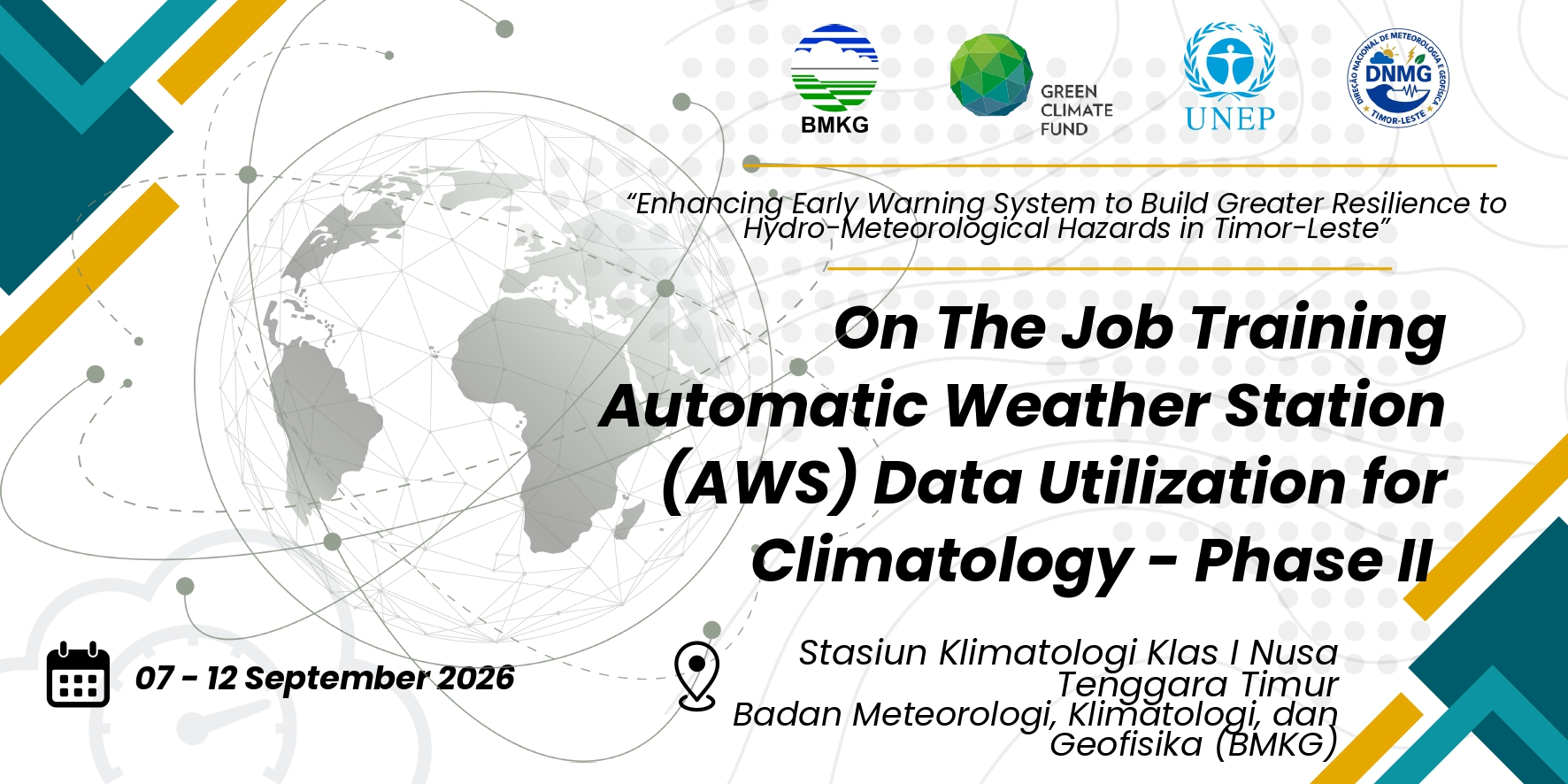
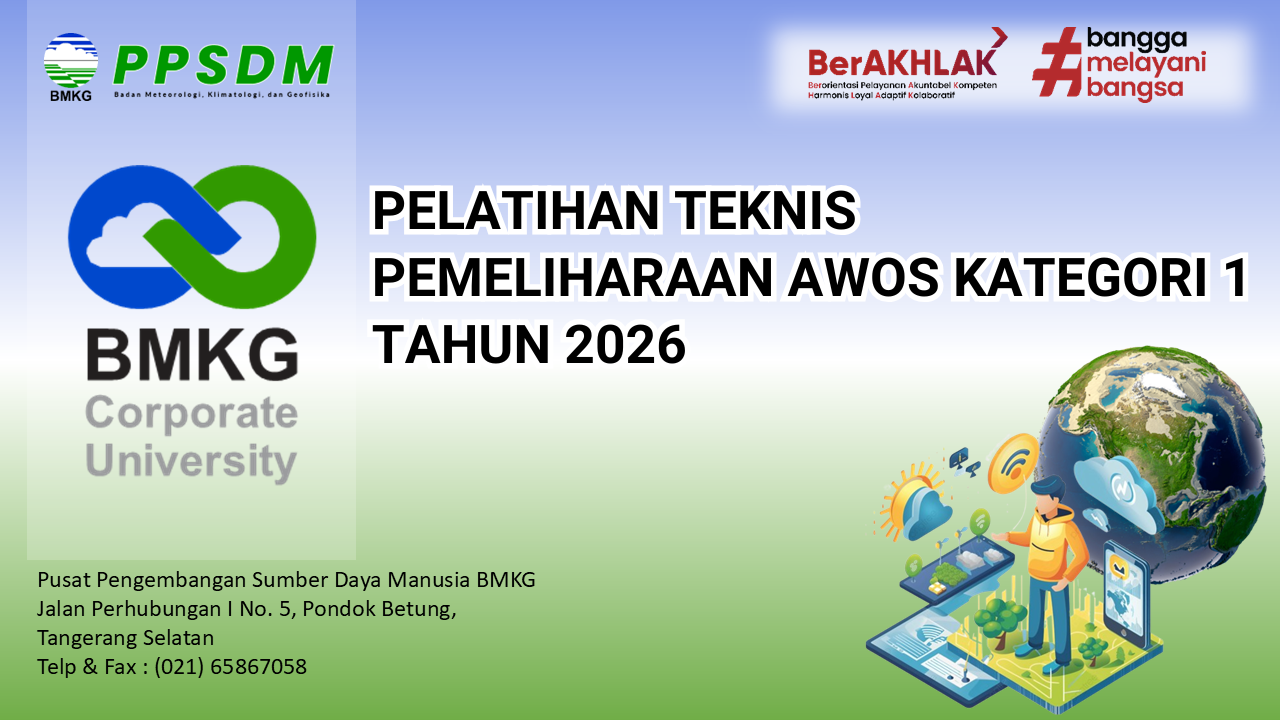
Specially promoted training course that is given prominence due to its relevance, or importance offer significant value, aligning with your professional development needs.
A MOOC, or Massive Open Online Course, is an online learning platform designed to provide unlimited participation and open access to learning materials to anyone with an internet connection.
An open group discussion is a type of structured conversation that involves multiple participants engaging in a dialogue on a specific topic or range of topics.
These training programs at Pusdiklat BMKG are designed to enhance the skills and knowledge of professionals in meteorology, climatology, geophysics, instrumentation, and related fields, ensuring they are well-equipped to serve the public and contribute to scientific advancements.
Leadership
Training offers comprehensive leadership training programs designed to enhance the skills of civil servants.
Technical
The programs prepare professionals to contribute to scientific advancements and public service.
Basic Training Civil Servant
These comprehensive courses ensure that new civil servants are well-prepared to fulfill their duties efficiently and ethically.
Functional
Participants also engage in disaster risk management to effectively handle natural hazards and communication strategies (Meteo, Climate, and Geology
The BMKG Learning Management System (LMSBMKG) is a web-based software used by BMKG to create, store, reuse, manage and deliver learning materials to training participants or other learning activities. LMSBMKG allows participants, teachers and organizers to interact using collaboration features.
LMSBMKG offers a management mechanism that makes it easy for employees to access learning from anywhere and at any time. LMSBMKG also provides opportunities to expand learning opportunities for employees in response to the organization's need to fulfill 20 hours of education and training/person/year.
Several benefits can be obtained by employees by using LMSBMKG: Information for employees about training activities both online and in class, storing all activities of training participants, participants can still access training documentation (materials and others) that they have participated in, and participants can interact with teachers and organizers through available collaboration media.